Back to Industry Insights

What Are the Biggest Myths About Steel Buildings That U.S. Builders Still Believe?

Pre-engineered steel buildings have been transforming commercial construction across the United States for decades. Yet, despite their proven track record, a surprising number of myths still hold some builders back from making the switch. It is time to set the record straight and separate fact from fiction once and for all.

Why Do Myths About Steel Buildings Persist in the U.S. Construction Industry?

Misconceptions in construction tend to stick around longer than they should. Many builders formed their opinions about steel buildings early in their careers, often based on outdated examples or second-hand information, and those early impressions have simply never been updated.

The reality is that pre-engineered steel building technology has advanced enormously over the past two decades. Today's steel buildings bear very little resemblance to the basic industrial sheds that first shaped perceptions. Understanding what has actually changed is the first step toward making smarter, more confident construction decisions.

Myth 1: Steel Buildings All Look the Same - Plain and Industrial

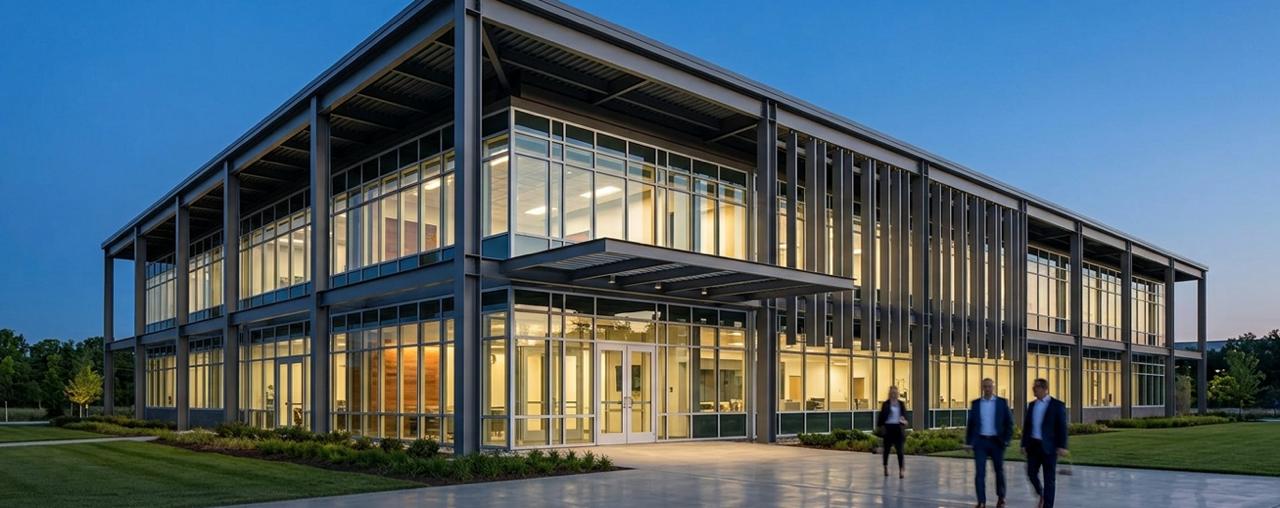
This is perhaps the most widespread myth and the easiest to disprove. Many U.S. builders and developers still picture a bare metal shed when they hear the words “steel building.” That image is decades out of date.

Modern pre-engineered steel buildings can be finished with:

  • Brick and stone facades that complement virtually any architectural style
  • Full glass frontages for retail and office environments
  • Architectural metal panels in virtually any color and profile
  • Custom rooflines, canopies, and entrance features
The steel frame sits behind the finish. What the world sees is entirely up to the designer, and the results consistently surprise people who expect something purely utilitarian.

Myth 2: Steel Buildings Are Not Strong Enough for Serious Commercial Use

Some builders question whether pre-engineered steel structures can handle the demands of heavy commercial and industrial use. The facts say otherwise.

Steel is one of the strongest structural materials available. Pre-engineered steel buildings are engineered to withstand high wind speeds, heavy snow loads, seismic activity, and decades of daily use. They meet or exceed all relevant U.S. building codes and standards, and AISC-certified manufacturers ensure every component is produced to the highest levels of structural integrity.

In fact, steel buildings can outperform traditional concrete and masonry structures in extreme weather events, a fact that is becoming increasingly relevant as climate conditions across the U.S. intensify.

‍
‍

Myth 3: Pre-Engineered Steel Buildings Are Only Suitable for Warehouses

Walk past a steel building today and it might be a hospital, a school, a retail showroom, a sports facility, or a multi-story office complex. The idea that steel buildings are only appropriate for warehouses is one of the most limiting misconceptions in the U.S. construction industry.

Pre-engineered steel buildings are actively being used across a wide range of commercial applications:
  • Retail stores, auto dealerships, and showrooms
  • Healthcare clinics and medical centers
  • Schools, community halls, and recreational facilities
  • Manufacturing plants and logistics hubs
  • Office buildings and hybrid workspaces
The clear-span capability of steel, which delivers wide, column-free interior spaces, makes it more versatile than many traditional building methods, not less.

Myth 4: Steel Buildings Are Too Expensive for Smaller Commercial Projects

Cost is one of the most common objections and one of the most misunderstood. The assumption is that pre-engineered steel buildings carry a premium price tag. The opposite is typically true.

Compared to traditional construction of the same size, pre-engineered steel buildings regularly come in 20% to 35% lower in total build cost. Factory precision reduces material waste. Fewer on-site workers are needed for fewer days. Lighter structures require simpler, less expensive foundations. Faster completion cuts financing costs and allows businesses to begin operations sooner.

For smaller commercial projects especially, these savings can be the deciding factor between a project that is viable and one that is not.

Myth 5: Steel Buildings Are Difficult to Modify or Expand

Some builders worry that once a steel building is erected, it is difficult to change. The opposite is true, and this is one of steel's greatest practical advantages.

Pre-engineered steel buildings can be designed from the outset with future expansion in mind. Adding new bays, extending walls, increasing roof heights, or reconfiguring interior layouts can be simpler and less disruptive with steel than with concrete or masonry construction. For U.S.businesses that plan to grow, this built-in adaptability is a major and genuinely valuable long-term asset.

How Can Working with the Right Partner Change Everything?

Many of these myths persist simply because builders have not yet worked with a high-quality pre-engineered steel building provider. The right partner makes all the difference in design, quality, and the overall experience.
‍
With over 18 years of global experience, AISC certification, and a dedicated U.S subsidiary, Phenix Construction Technologies delivers precision-engineered pre engineered steel buildings that challenge each of these myths in practice. From striking architectural finishes to structural resilience and full turnkey project delivery, we bring a level of expertise that redefines what U.S. builders expect from a steel building.
‍
Ready to see what modern steel construction really looks like? Contact Phenix Construction Technologies USA today for a free consultation and discover the truth about pre-engineered steel buildings.

Frequently Asked Questions (FAQs)

Q1. Are pre-engineered steel buildings strong enough to meet U.S. building codes?

Yes, pre-engineered steel building can be engineered to meet applicable building codes and project-specific design requirements. AISC-certified manufacturers ensure that every structural component is produced to exact specifications, giving builders and owners confidence in the integrity and safety of the completed structure.

Q2. Can a pre-engineered steel building be designed to suit a specific brand or architectural style?

Absolutely. Modern pre-engineered steel buildings support a wide range of exterior finishes, facade treatments, and custom design features. Brick, glass, architectural cladding, and custom roof profiles can all be incorporated, allowing the building to reflect any brand identity or architectural requirement.

Q3. Are steel buildings only practical for large industrial or warehouse projects?

Not at all. Pre-engineered steel buildings are used across retail, healthcare, education, office, recreational, and industrial sectors throughout the U.S. Their clear-span design delivers flexible, column-free interior spaces that suit a far wider range of commercial applications than many builders realize.

Q4. How do pre-engineered steel buildings compare to traditional construction on total cost?

Pre-engineered steel buildings typically cost 20% to 35% less than traditional construction of equivalent size. Savings come from factory precision, reduced material waste, lower labor requirements, lighter foundation needs, and faster build timelines that reduce financing and holding costs throughout the project.

Q5. Is it difficult to expand a pre-engineered steel building after it has been completed?

Pre-engineered steel buildings are specifically designed to allow future expansion. Adding bays, extending the footprint, or increasing height can be straightforward and cost-effective — far less disruptive than modifying a traditional concrete or masonry structure. This makes steel an ideal long-term solution for growing U.S. businesses.