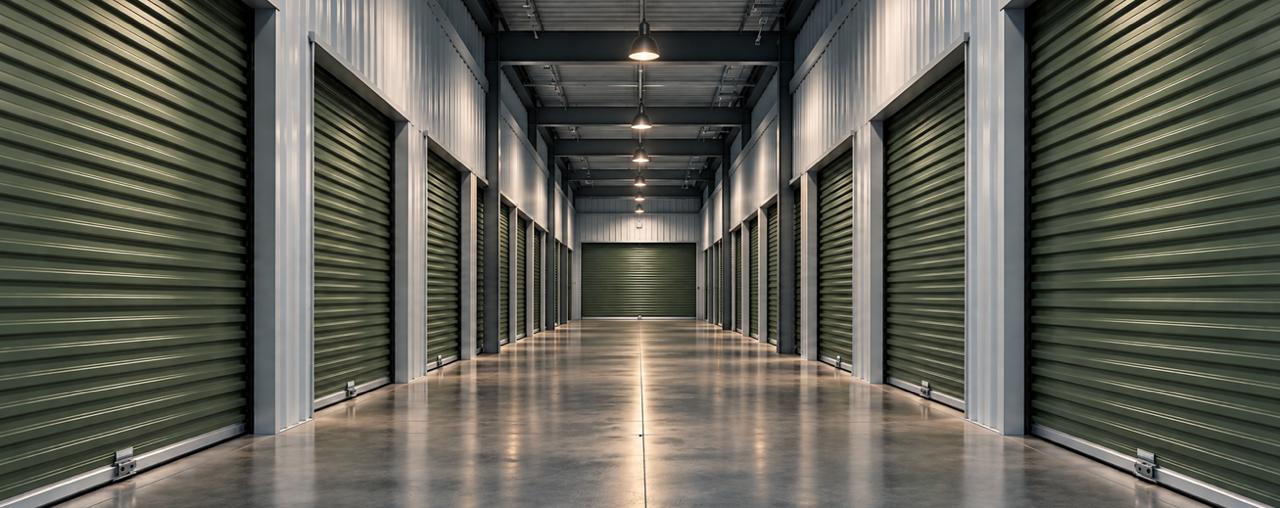
Why Are Self-Storage Businesses One of the Fastest-Growing Users of Steel
Buildings?
Self-storage is booming across the United States. New facilities are opening in cities, suburbs, and smaller towns at a pace few industries can match. Behind almost every one of these projects is the same structural choice: pre-engineered steel buildings. There is a very clear reason for that, and it goes far deeper than cost alone.
Why Is the Self-Storage Industry Growing So Fast in the US?
Americans are accumulating more belongings, downsizing their homes, relocating for work, and running small businesses from residential addresses. Every one of these trends drives demand for self-storage space, and that demand is showing no signs of slowing down.
The U.S. self-storage industry is now one of the most consistently profitable commercial real estate sectors in the country. Occupancy rates remain high, returns are reliable, and new operators are entering the market rapidly to capitalize on supply gaps that exist across many U.S. markets.
What makes this growth story even more compelling is the role pre-engineered steel buildings play in making new self-storage developments faster, more cost effective, and more profitable to deliver.
What Makes Steel Buildings the Obvious Choice for Self -Storage?
Self-storage is a straightforward business model, but it has very specific construction requirements. The building must maximize usable floor area, remain secure and durable, and be delivered as cost-effectively as possible to protect the return on investment.
Pre-engineered steel buildings meet these requirements naturally. Here is why self-storage operators consistently choose steel over any other building method:
- Maximum usable space: Clear-span steel frames eliminate interior columns, creating wide, unobstructed floor areas that can be divided into storage units of various sizes.
- Fast construction: Pre-engineered components arrive factory ready. Erection is significantly faster than traditional construction methods, getting the facility operational and generating revenue sooner.
- Lower build cost: Reduced labor, minimal material waste, and lighter foundation requirements mean pre-engineered steel buildings can cost 20% to 35% less than conventional construction.
- Low maintenance: Steel does not rot, warp, attract pests, or deteriorate quickly. Once built, a steel self-storage facility demands very little ongoing maintenance spending.
- Scalability: As demand grows, pre-engineered steel buildings can be expanded efficiently by adding new units or additional stories without starting over from scratch.
How Do Steel Buildings Maximize Profitability for Self -Storage Operators?
In self-storage, profitability is driven by one key metric: rentable square footage. The more usable floor area a facility can offer, the more units it can rent and the more revenue it generates. Pre-engineered steel buildings are highly effective at maximizing this metric.
Because steel frames span large distances without internal columns, more of the building footprint can be used as rentable space. Nothing is lost to unnecessary structural support or awkward corners. Unit layouts can be planned precisely around the structural grid creating efficient corridors and storage units that make use of the available space.
Energy costs are lower, too. Insulated steel panels help maintain consistent internal temperatures, reducing the cost of operating climate-controlled units, which are among the most profitable product types in the U.S. self-storage market.
What Types of Self-Storage Facilities Are Built with Steel?
The versatility of pre-engineered steel buildings means they are being used across a wide range of U.S. self-storage developments.
Single-story drive-up facilities on suburban and semi-rural sites
- Multi-story urban self-storage buildings maximizing value on smaller footprints
- Climate-controlled indoor storage facilities with insulated steel panel systems
- RV, boat, and vehicle storage with wide-span steel structures and oversized access doors
- Mixed-use developments combining retail or office space with self-storage on the same site
In every format, steel delivers the structural performance, design flexibility, and cost efficiency that self-storage operators need to build a profitable facility and bring it to market quickly.
How Quickly Can a Steel Self-Storage Facility Be Built and Opened?
Speed to market is critical in self-storage. A facility that opens sooner starts generating rental income sooner, and in a competitive market, being first to a new location can help establish a customer base that may be difficult for competitors to dislodge.
Pre-engineered steel buildings give self-storage developers a significant speed advantage. Because components are precision-manufactured in a controlled factory environment and delivered ready for assembly, on-site erection timelines can be significantly shorter than those of traditional construction. A project that might take 12 to 18 months to build conventionally can be completed in as little as 4 to 6 months using pre-engineered steel.
That time advantage can translate into earlier revenue, faster loan repayment, and a stronger overall return on investment.
How Can Phenix Construction Technologies Support Your Self-Storage Development?
Building a successful self-storage facility starts with choosing the right structural system and the right partner to deliver it. Phenix USA brings over 18 years of global experience in designing and delivering precision-engineered pre- engineered steel buildings for commercial projects across
the United States.
With AISC certification and a dedicated U.S. subsidiary, MB Phenix provides a complete turnkey service from initial design through factory manufacturing to full on-site erection. Every building is engineered to exact project specifications, delivered on schedule, and built to perform for decades.
Ready to bring your self-storage project to life faster and smarter? Contact MB Phenix USA today for a free consultation and discover how pre-engineered steel can maximize the return on your development.
Frequently Asked Questions (FAQs)
Q1. Why do self-storage businesses prefer pre-engineered steel buildings over traditional construction?
Pre-engineered steel buildings deliver faster build times, lower construction costs, and maximum usable floor area - all critical factors for self-storage profitability. Steel's clear-span design eliminates interior columns, creating flexible floor plans that can be divided into storage units in a variety of configurations.
Q2. Can pre-engineered steel buildings support multi-story self-storage facilities?
Yes, pre-engineered steel buildings are widely used for multi-story self-storage developments, particularly in urban U.S. markets where land costs make vertical construction essential. Steel's structural strength and design flexibility make it well suited to multi-level configurations with efficient internal layouts.
Q3. How do insulated steel panels benefit climate-controlled self-storage units?
Insulated steel panel systems maintain more stable internal temperatures throughout the year, reducing the energy cost associated with operating climate-controlled units. This can improve operating margins for self-storage operators, since climate-controlled units command premium rental rates in the U.S. market.
Q4. How long does a pre-engineered steel self-storage facility last?
A well-built pre-engineered steel building has a structural lifespan of 50 years or more depending on design, materials, environmental conditions, maintenance, and other factors. Steel resists rot, pests, and weather-related deterioration, helping keep maintenance requirements low and protect the long-term value.
Q5. Can a steel self-storage facility be expanded as the business grows?
Pre-engineered steel buildings are specifically designed with future expansion in mind. Additional bays, new unit blocks, or increased building height can potentially be added as occupancy grows and demand increases, without necessarily disrupting the day-to-day operation of the existing facility.


.png)