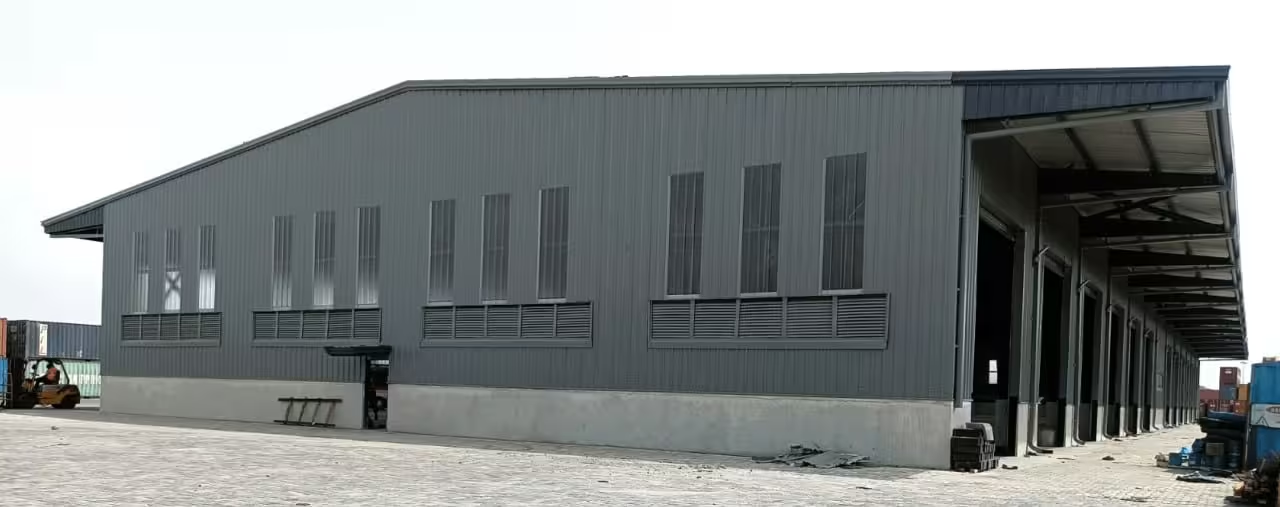
Why More U.S. Retailers Are Choosing Steel Buildings Over Traditional Construction
The U.S. retail industry is evolving rapidly. Consumers expect new stores to open quickly, shopping experiences to stay fresh, and businesses to expand into new markets without long delays. At the same time, rising construction costs, labor shortages, and unpredictable project timelines are making traditional building methods increasingly difficult to justify.
To stay competitive, more retailers are turning to pre-engineered steel buildings as a faster, more cost-effective alternative. With shorter construction schedules, flexibledesigns, and lower long-term operating costs, steel buildings are helping retailers bring new locations to market sooner while protecting their investment.
Why Are Retailers Moving Away from Traditional
Construction?
For decades, concrete, masonry, and wood-frame construction have been the standard for retail developments. While these methods remain common, they often struggle to meet the speed and efficiency demanded by today’s retail businesses.
Some of the biggest challenges include:
- Long construction timelines: Traditional retail projects can take 12 to 18 months or longer, delaying store openings and revenue generation.
- Rising construction costs: Labor shortages, fluctuating material prices, and weather-related delays can quickly push projects over budget.
- Limited flexibility: Expanding or modifying a conventional building often
requires extensive structural work, adding time and expense. - High maintenance: Materials such as wood and masonry require ongoing
repairs and upkeep throughout the building’s life.
Pre-engineered steel buildings overcome many of these challenges by combining precision engineering with efficient manufacturing and streamlined on-site assembly.
Learn more about pre-engineered metal buildings: https://us.mbphenix.com/industry-insights/understanding-preengineered-metal-buildings-for-the-usa-market
How Do Steel Buildings Give Retailers a Competitive Advantage?
In retail, speed directly impacts profitability. Every month a new store opens earlier represents additional sales, stronger brand visibility, and an opportunity to establish customer loyalty ahead of competitors.
Pre-engineered steel buildings are manufactured off-site while foundation work takes place simultaneously. Once the building components arrive, installation can begin immediately, significantly reducing overall construction time.
As a result, many retail projects can be completed in 3 to 5 months, compared to 12 to 18 months for a traditional building.
For retailers opening multiple locations each year, this faster delivery can accelerate expansion plans and improve returns across an entire development portfolio.
Why Are Steel Buildings Ideal for Retail Spaces?
Beyond faster construction, steel buildings offer several design and operational advantages that make them particularly well suited to modern retail environments.
Large, Open Floor Plans
Steel’s clear-span design eliminates the need for interior support columns across large floor areas. This gives retailers complete flexibility when designing store layouts, display areas, checkout zones, fitting rooms, and customer pathways.
Attractive, Brand-Focused Exteriors
Modern steel buildings are far removed from the industrial appearance many people associate with metal structures.
Retail buildings can incorporate:
- Brick or stone facades
- Glass storefronts
- Architectural cladding
- Decorative canopies
- Custom signage
- Modern exterior finishes
The result is a building that reflects your brand while maintaining the structural and financial advantages of steel construction.
Built for Future Growth
Retail businesses evolve, and buildings need to evolve with them.
Pre-engineered steel buildings can be designed to accommodate future expansion, making it easier to add floor space, extend the building footprint, or modify layouts as business needs change. This flexibility helps protect your investment and reduces the cost of future growth.
How Do Steel Buildings Reduce Long-Term Costs?
While the initial construction savings are significant, the long-term financial benefits are just as compelling.
A pre-engineered retail steel building can typically cost 20% to 35% less than a
comparable traditional structure.
Over its lifetime, additional savings can come from:
- Lower maintenance requirements
- Reduced repair costs
- Resistance to rot, termites, and warping
- Durable structural performance
- Energy-efficient insulated wall and roof systems that help reduce heating and cooling expenses
For retailers managing multiple locations, these operational savings accumulate across every property, improving long-term profitability.
Learn more about our pre-engineered metal building solutions: https://us.mbphenix.com/products-solutions/pre-engineered-metal-building
Which Retail Projects Benefit Most from Steel Buildings?
Pre-engineered steel buildings are now widely used across the retail sector, including:
- Big-box retail stores
- Home improvement centers
- Automotive dealerships
- Vehicle service and tire centers
- Garden centers
- Strip malls and retail plazas
- Outlet shopping centers
- Drive-through retail facilities
- Warehouse retail stores
Their combination of speed, affordability, and design flexibility makes them an ideal solution for virtually any commercial retail development.
Learn more about how
pre-engineered metal buildings are transforming construction in the U.S.:
These buildings are being adopted across a wide range of U.S. retail formats.
Build Your Next Retail Project with Phenix USA
Delivering a successful retail development requires more than quality materials it
requires the right partner.
With more than 18 years of global experience, AISC certification, and a dedicated U.S. operation, Phenix USA provides complete turnkey solutions, including design, engineering, precision manufacturing, and project management.
Every building is engineered to your exact requirements, manufactured with precision, and delivered on schedule to help you open faster and build with confidence.
Ready to Launch Your Next Retail Project?
Contact Phenix today for a free consultation and discover how pre-engineered steel buildings can help you build faster, reduce costs, and support long-term business growth.
Frequently Asked Questions
Can pre-engineered steel buildings be designed to look like
traditional retail stores?
Absolutely. Modern pre-engineered steel buildings support a wide range of exterior finishes, including brick facades, glass storefronts, and architectural cladding that can match any retail brand identity. The steel structure sits behind the finish, keeping construction costs low without compromising appearance.
How much faster can a retail steel building be completed compared to traditional construction?
Pre-engineered retail steel buildings can typically be completed in 3 to 5 months, compared to 12 to 18 months for a traditional building of similar size. Factory manufacturing of components runs in parallel with site preparation, eliminating the waiting time that can slow conventional construction projects.
Are steel retail buildings durable enough for high-traffic commercial use?
Yes. Pre-engineered steel buildings are engineered to withstand heavy daily use, high winds, snow loads, and seismic activity. Steel does not rot, warp, or deteriorate in the same way traditional materials can, making it one of the most durable and low-aintenance options for U.S. retail construction.
Can a retail steel building be expanded if the business
grows?
Pre-engineered steel buildings are specifically designed to accommodate future expansion. Adding floor space, extending the footprint, or increasing ceiling height can all be done with minimal disruption to ongoing retail operations, making steel a smart long-term investment for growing U.S. retailers.
What are the typical cost savings on a pre-engineered retail steel building compared to traditional construction?
U.S. retailers typically save between 20% and 35% on total construction costs by choosing pre-engineered steel over conventional construction. Savings can come from reduced on-site labor, lower material waste, lighter foundation requirements, and significantly shorter construction timelines that reduce financing and holding costs.



.png)